A slogan from the Occupy movement shows a perfectly formed example of the reflexive paradox:
"All property is theft."
"Theft" is the denial of property. Implying that theft occurred means the existence of property.
The slogan tosses in the absolute "all." It has been known since antiquity that absolutes set up a reflexive paradox because statement's become paradoxical as soon as one applies it to itself.
If you believe that the rich have stolen from the poor, then the problem is the denial of property rights (theft), not the existence of property rights.
Showing posts with label paradox. Show all posts
Showing posts with label paradox. Show all posts
Sunday, October 16, 2011

Thursday, May 19, 2011
The Heart of Marxism
I've been reading Erich Fromm's "Marx's Concept of Man" which includes English translations of several works by Marx himself.
The following sentence is the beating core of Marxist/Hegelian dialectics.
"self-referring negation" is, of course, the the liar's paradox. You can find self-reference in any language or mathematical system.
Classical logicians knew of paradoxes but sought to avoid them.
Modern philosophy (from Hegel onward) embraces paradox.
Hegel developed a number of arguments to show freedom is slavery and slavery is freedom. Marx spewed forth reams on the notion that if we negate the foundations of western civilization and new workers paradise would spring forth from the paradoxical wreckage of culture.
Many years ago, I launched in on a project to demonstrate that Marx was simply using variations of the self-referential paradox to spew forth self-negating nonsense.
I was delighted to find Marx himself admitting that his writings are nothing more than a twist on the liar's paradox.
Classical philosophers (such as the US Founders) worked to avoid paradoxes. Modern philosophers have a tendency to build paradoxes into the foundation of their thinking.
Once you have a self-referential paradox couched in your belief system, you have a way to make anything you want to believe true.
Anyway, I was totally delighted to find Marx admitting that his work is just a long convolution of the liar's paradox. This quote was from page 189 of Eric Fromm's "Marx Concept of Man," which includes an English translation of Marx's "Critique of Hegel's Dialectical and General Philosophy."
The following sentence is the beating core of Marxist/Hegelian dialectics.
"Thus Hegel, in so far as he sees the positive significance of the self-referring negation (through an alienation mode), conceives man's self-estrangement, alienation of being, loss of objectivity and reality [...]"
"self-referring negation" is, of course, the the liar's paradox. You can find self-reference in any language or mathematical system.
Classical logicians knew of paradoxes but sought to avoid them.
Modern philosophy (from Hegel onward) embraces paradox.
Hegel developed a number of arguments to show freedom is slavery and slavery is freedom. Marx spewed forth reams on the notion that if we negate the foundations of western civilization and new workers paradise would spring forth from the paradoxical wreckage of culture.
Many years ago, I launched in on a project to demonstrate that Marx was simply using variations of the self-referential paradox to spew forth self-negating nonsense.
I was delighted to find Marx himself admitting that his writings are nothing more than a twist on the liar's paradox.
Classical philosophers (such as the US Founders) worked to avoid paradoxes. Modern philosophers have a tendency to build paradoxes into the foundation of their thinking.
Once you have a self-referential paradox couched in your belief system, you have a way to make anything you want to believe true.
Anyway, I was totally delighted to find Marx admitting that his work is just a long convolution of the liar's paradox. This quote was from page 189 of Eric Fromm's "Marx Concept of Man," which includes an English translation of Marx's "Critique of Hegel's Dialectical and General Philosophy."
Saturday, March 21, 2009
Hedging Risk with Leverage
For the last several decades, the investing community has been ruled by a paradoxical notion that investors can hedge their risk by taking a leveraged position. This view is paradoxical because the derivatives used in leveraging were designed to amplify risk.
There are some isolated cases where the hedging strategy works; however, when implemented on a wide scale, this method of taking a leveraged position to hedge risk simply creates a systemic risk and sets up the market for failure.
Classical and Modern thought have a fundamentally different approach to paradox. Thinkers of the Aristotelian tradition sought to avoid paradox. Modern thinkers, from Hegel to Bertrand Russell, made paradoxical thinking central to their world view.
I believe that ideas matter. The ideas from the classical era produced science, the US Constitution, the free market, and prosperity.
The paradox ridden dialectical view keeps creating systems that fail. It has produced communism, fascism, Nazism and a score of radicalized ideologies.
I irk Libertarians in that I draw a sharp distinction between the free market and capitalism. I support the free market, but believe that the modern dialectical view of the market taught in schools (capitalism) belongs in the same scrap heap with all of the other paradox ridden theories of the modern era.
Last week, President Obama made a stir by comparing AIG executives to suicide bombers. I think there is merit to his statement. A suicide bomber holds the paradoxical belief that doing a great evil will bring on a greater good. The AIG derivative department believed that they could hedge risk by taking a leveraged position.
Obama is content to lay blame on a character defect of the AIG executives. I take my thinking one step further and realize that both the suicide bomber and AIG derivative investor learned their snide little world view in a school.
The effects of education are easy to see. Warren Buffet studied investment ages ago when the classical liberal worldview held sway. He learned a system called value investing which was driven by a desire to weigh and measure the values of different investments. Not only did Warren Buffet do well in his career, a fairly large number of people saw an improvement in their lives along with Buffet.
The modern investor, the people who've given us a steady stream of market bubbles and crashes, learned their world view in schools where Marxian thought holds sway under the moniker of modern liberalism or progressivism. The classical liberals and their quaint views about value have been driven out of the picture for shiny new equations and computer models based on material dialectics.
Maurice J. Dupr&ecute; has an interesting article discussing the Mathematical Seeds of the Economic Collapse in which he criticizes the idea that one could simply take Einstein's equations from the study of Brownian motion and build an investing strategy on it. Such a model starts with the hubristic assumption: "Let's assume people are nothing but specs of pollen.")
This question of the source of or woes is extremely important. If our woes are the result of the greed of few bad apples who mucked up the works, then the solution is aggressively enforced regulation. If the problem is our view of the market, then the new regulatory regime does nothing but set us up for the next round of failure. (This was the point I was trying to make in hubris v. greed.
In conclusion, the paradoxical idea that a society can hedge risk by aggressively leveraging investments proved to be as unstable as all of the paradox ridden system of the Hegelian/Marxian tradition. If we wished to return to an age of prosperity, we need to develop a world view that reason and logic over paradox.
There are some isolated cases where the hedging strategy works; however, when implemented on a wide scale, this method of taking a leveraged position to hedge risk simply creates a systemic risk and sets up the market for failure.
Classical and Modern thought have a fundamentally different approach to paradox. Thinkers of the Aristotelian tradition sought to avoid paradox. Modern thinkers, from Hegel to Bertrand Russell, made paradoxical thinking central to their world view.
I believe that ideas matter. The ideas from the classical era produced science, the US Constitution, the free market, and prosperity.
The paradox ridden dialectical view keeps creating systems that fail. It has produced communism, fascism, Nazism and a score of radicalized ideologies.
I irk Libertarians in that I draw a sharp distinction between the free market and capitalism. I support the free market, but believe that the modern dialectical view of the market taught in schools (capitalism) belongs in the same scrap heap with all of the other paradox ridden theories of the modern era.
Last week, President Obama made a stir by comparing AIG executives to suicide bombers. I think there is merit to his statement. A suicide bomber holds the paradoxical belief that doing a great evil will bring on a greater good. The AIG derivative department believed that they could hedge risk by taking a leveraged position.
Obama is content to lay blame on a character defect of the AIG executives. I take my thinking one step further and realize that both the suicide bomber and AIG derivative investor learned their snide little world view in a school.
The effects of education are easy to see. Warren Buffet studied investment ages ago when the classical liberal worldview held sway. He learned a system called value investing which was driven by a desire to weigh and measure the values of different investments. Not only did Warren Buffet do well in his career, a fairly large number of people saw an improvement in their lives along with Buffet.
The modern investor, the people who've given us a steady stream of market bubbles and crashes, learned their world view in schools where Marxian thought holds sway under the moniker of modern liberalism or progressivism. The classical liberals and their quaint views about value have been driven out of the picture for shiny new equations and computer models based on material dialectics.
Maurice J. Dupr&ecute; has an interesting article discussing the Mathematical Seeds of the Economic Collapse in which he criticizes the idea that one could simply take Einstein's equations from the study of Brownian motion and build an investing strategy on it. Such a model starts with the hubristic assumption: "Let's assume people are nothing but specs of pollen.")
This question of the source of or woes is extremely important. If our woes are the result of the greed of few bad apples who mucked up the works, then the solution is aggressively enforced regulation. If the problem is our view of the market, then the new regulatory regime does nothing but set us up for the next round of failure. (This was the point I was trying to make in hubris v. greed.
In conclusion, the paradoxical idea that a society can hedge risk by aggressively leveraging investments proved to be as unstable as all of the paradox ridden system of the Hegelian/Marxian tradition. If we wished to return to an age of prosperity, we need to develop a world view that reason and logic over paradox.
Tuesday, July 15, 2008
School Monopolies and Monoculturism
This post has two sections: an examination of the Tolerance Paradox and a part on the rise of the Public School Monopoly.
BTW, one of the many examples of the reflexive paradox is the observation that a tolerant government would be tolerant of individual prejudices. It is also the nature of Democratically elected governments to reflect the collective prejudices of the people. It is not uncommon for politicians in a free society to encourage the development of prejudices to gain political power. BTW, there has never been a political party that was free of prejudices in some form or another. Anyone foolish enough to believe their political group is free of prejudice is deluded. Those who are intolerant of intolerance are, themselves, intolerant.
On the issue of paradox. Paradoxes lead immediately to conflict. The tolerance paradox means that there is a conflict between American ideals and the actions of individuals. There is not a resolution of the tolerance paradox. We can and should denounce politicians who try to use intolerance (it is myriad of forms) to gain political power. Yet, we must realize that one never achieves their ideals.
For that matter, the desire to socialize children and give them all identical educations is routinely used in arguments against charter and private schools ... as we saw in last year's voucher debate.
The American founders did not include instructions on how to set up a public school monopoly in our Constitution. For that matter, one could argue that the present day politically charged public school monopoly is anathema to the beliefs of the founders.
The odd thing is that the public school monopoly, which from its inception was set up to establish a monoculture, markets itself as a bastion of multiculturism, and attacks mainstream America for monoculturism.
The marketing isn't that odd. Exxon/Mobile advertises itself as a bastion of environmental concern and has spent more money on environmental remediation than any other company. The odd thing is that so many people fall for the line.
As for the state of tolerance, Americans have been fared better than the majority of cultures throughout history. We are still far from our ideal and there is room for improvement.
As for the charge of monoculturism in America, I would point out that the leading source of monoculturalism today is the public school monopoly. Claims that the school monopoly is a source of multiculturalism is the same as saying that Exxon is the standard bearer of environmental action.
The Tolerance Paradox
My last post was about the accusation that America, as a whole, was monocultural. I argue that the United States has been far more accomodating of cultural diversity than other nations. In being accomodating of other cultures, we have also been accomodating of the prejudices from these cultures. Notably, the European settlers in the United States tended to maintain their European bias.BTW, one of the many examples of the reflexive paradox is the observation that a tolerant government would be tolerant of individual prejudices. It is also the nature of Democratically elected governments to reflect the collective prejudices of the people. It is not uncommon for politicians in a free society to encourage the development of prejudices to gain political power. BTW, there has never been a political party that was free of prejudices in some form or another. Anyone foolish enough to believe their political group is free of prejudice is deluded. Those who are intolerant of intolerance are, themselves, intolerant.
On the issue of paradox. Paradoxes lead immediately to conflict. The tolerance paradox means that there is a conflict between American ideals and the actions of individuals. There is not a resolution of the tolerance paradox. We can and should denounce politicians who try to use intolerance (it is myriad of forms) to gain political power. Yet, we must realize that one never achieves their ideals.
The Public School Monopoly
Last week the Cato Podcast had a conversation with Neal McClusky (right click and select "save" to download MP3) notes that a driving factor for the establishment of a progressive public school monopoly was a belief that a democracy must have a monoculture to survive. The type of thinking that led to the establishment of the present public school monopoly was very much in sync with the thinking of Hegelian/Marxist mindset that dominated Europe in the 1900s and led to two world wars and vast killing fields.For that matter, the desire to socialize children and give them all identical educations is routinely used in arguments against charter and private schools ... as we saw in last year's voucher debate.
The American founders did not include instructions on how to set up a public school monopoly in our Constitution. For that matter, one could argue that the present day politically charged public school monopoly is anathema to the beliefs of the founders.
The odd thing is that the public school monopoly, which from its inception was set up to establish a monoculture, markets itself as a bastion of multiculturism, and attacks mainstream America for monoculturism.
The marketing isn't that odd. Exxon/Mobile advertises itself as a bastion of environmental concern and has spent more money on environmental remediation than any other company. The odd thing is that so many people fall for the line.
Conclusion
A free society will never rid itself of intolerance. (Free people are free to point out prejudice when they find it, but there is no way to force people from holding intolerant positions without intolerance.) A tolerant society seeks to protect its citizens, but does not seek to control their minds.As for the state of tolerance, Americans have been fared better than the majority of cultures throughout history. We are still far from our ideal and there is room for improvement.
As for the charge of monoculturism in America, I would point out that the leading source of monoculturalism today is the public school monopoly. Claims that the school monopoly is a source of multiculturalism is the same as saying that Exxon is the standard bearer of environmental action.
Friday, June 27, 2008
The Dialectics of Zeno
In the article on the Dialectics of Zeno I wanted to emphasize that many of our problems are not the result of character flaws of the people engaged in dialogue, but the form of the argument.
Parmenides and Zeno of Elea made astute observations about the nature of the cosmo. Their work also showed that the Pythagoreans, atomists and other schools of thought on the cosmos simply did not have the technology to answer the questions they were asking.
Zeno's overuse of reductio ad absurdum arguments (paradoxes) was not sustainable.
Meanwhile, the sophists were trying to find a way to bring intellectual discourse to the masses. They hosted public disputations to demonstrate rhetorical skills.
The sophists adopted the dialectics of Zeno. In their zeal to show intellectual acumen, the Sophists created a climate that was hostile to inquiry. Neither Zeno, nor the Sophists had ill intents. Their collective action, however, caused a deterioration in the quality of discourse.
Parmenides and Zeno of Elea made astute observations about the nature of the cosmo. Their work also showed that the Pythagoreans, atomists and other schools of thought on the cosmos simply did not have the technology to answer the questions they were asking.
Zeno's overuse of reductio ad absurdum arguments (paradoxes) was not sustainable.
Meanwhile, the sophists were trying to find a way to bring intellectual discourse to the masses. They hosted public disputations to demonstrate rhetorical skills.
The sophists adopted the dialectics of Zeno. In their zeal to show intellectual acumen, the Sophists created a climate that was hostile to inquiry. Neither Zeno, nor the Sophists had ill intents. Their collective action, however, caused a deterioration in the quality of discourse.
Saturday, June 16, 2007
Venturing Outdoors
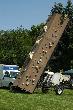 For Coco's afternoon walk, I decided to check out the Venture Outdoor Festival in Canyon Rim Park.
The goal of the festival is to encourage people to get active and live a healthy lifestyle. They had nutritional displays along with a variety of sports oriented booths.
 We Americans need to spend less time with the blogs, and more time experience life and nature.
I went in the afternoon. A lot of the activities at that time were geared toward kids. I had been hoping to taking the nieces and nephews to the festival. Unfortunately, they were out camping and missed this valuable media message about how you should spend more time venturing outdoors and less time experiencing media messages.
Hmmm, this particular seems to be caught in a paradox. Those most interested in learning about venturing out have ventured out.
I once invested in a company that made enviromentally friendly products to discover that people who are really into environmentally friendly products don't buy as much stuff as other folk.
Anyway, this post is my attempt to encourage people to go to the Venture Outdoor Festival. Since the festival will probably be over by the time people read this. I will dare put forward the idea that you can venture outdoors and get active without permission.
 Speaking of being out doors. For yesterday's walk, I decided to check out the off leash area at Lindsey Gardens. The off leash area at Lindsey Gardens was disappointing. The area was covered with trees (making frisbee tossing difficult). The really bad part of the walk is that the ground was covered with pine needles. I would toss the frisbee. Coco would start running. She would hit a pine cone and wipe out. Needles to say, she quickly lost interest in the game.
Friday, April 13, 2007
Pragmatism is an Ideal
Here is one to file under the category of paradox. Pragmatism is an ideal.
Occasionally I come across extremely empassioned pleas for people to cast their ideals aside and to follow the pragmatic course of action.
For example, the Bush administration had an impassioned plea for the United States to throw aside the ideals of the Powell Doctrine and the ideals of the United Nations to directly confront radical Islam by invading Iraq.
The problem, of course, is that pragmatism itself is an ideal. Even worse, it is an ideal that, from its inception, has nullified itself through resort to paradox.
When you look at modern history, I think you will find that many of the worst atrocities have come from the hands of people claiming themselves to be pragmatists.
Look at Western History: We adopted slavery because it was a way to get things done. The feudal order was based on pragmatic notion that a hierarchical order was the way to get things done. In US history, Andrew Jackson, Armstrong Custer led us in extermination wars with the Native Americans as pragmatic ways to get things done.
Further on the left: Stalin and Mao appeared as the great pragmatic leaders of the people. Breaking eggs (that is genocide) was the pragmatic step towards a peoples' paradise. Hitler considered himself a pragmatist. He and his band of rogues got into power as they were the ones willing to take the ugly pragmatic steps to get the job done.
In the cold war, the United States developed an unpleasant pattern of casting aside American ideals and supporting dictatorships simply because that was the pragmatic way to get things done.
Pragmatism is an ideology just like all of the ideologies that pragmists despise. Just as blind adherence to ideologies leads to folly, blind adherence to pragmatism led to great suffering.
The seduction of pragmatism is its paradoxical nature. People love to think in paradox. Unfortunately, since "pragmatism" is founded on paradox, it is one of the most dangerous ideals. You never know which direction it will take. In most all cases, the pragmatic man of action declares pragmatism simply because he wants to take us in directions that we are ill advised to follow.
Occasionally I come across extremely empassioned pleas for people to cast their ideals aside and to follow the pragmatic course of action.
For example, the Bush administration had an impassioned plea for the United States to throw aside the ideals of the Powell Doctrine and the ideals of the United Nations to directly confront radical Islam by invading Iraq.
The problem, of course, is that pragmatism itself is an ideal. Even worse, it is an ideal that, from its inception, has nullified itself through resort to paradox.
When you look at modern history, I think you will find that many of the worst atrocities have come from the hands of people claiming themselves to be pragmatists.
Look at Western History: We adopted slavery because it was a way to get things done. The feudal order was based on pragmatic notion that a hierarchical order was the way to get things done. In US history, Andrew Jackson, Armstrong Custer led us in extermination wars with the Native Americans as pragmatic ways to get things done.
Further on the left: Stalin and Mao appeared as the great pragmatic leaders of the people. Breaking eggs (that is genocide) was the pragmatic step towards a peoples' paradise. Hitler considered himself a pragmatist. He and his band of rogues got into power as they were the ones willing to take the ugly pragmatic steps to get the job done.
In the cold war, the United States developed an unpleasant pattern of casting aside American ideals and supporting dictatorships simply because that was the pragmatic way to get things done.
Pragmatism is an ideology just like all of the ideologies that pragmists despise. Just as blind adherence to ideologies leads to folly, blind adherence to pragmatism led to great suffering.
The seduction of pragmatism is its paradoxical nature. People love to think in paradox. Unfortunately, since "pragmatism" is founded on paradox, it is one of the most dangerous ideals. You never know which direction it will take. In most all cases, the pragmatic man of action declares pragmatism simply because he wants to take us in directions that we are ill advised to follow.
Subscribe to:
Posts (Atom)