I made myself a white man's fire in my fancy new rocket stove.
I started by creating a lot of smoke, then I got a raging inferno with flames reaching a foot or two out of the stove. I then proceded to burn my plate of beans.
Cooking on the stove brought up the question of heating with wood.
The rocket stove is optimized for outdoor cooking. A more traditional Franklin Stove is what one wants for heating.
As I live in a valley with a pollution problem, I would want to go the route of wood pellets stoves for heating.
IMHO, the path to cleaner energy will have us using equipment optimized to the task at hand.
Showing posts with label alternative energy. Show all posts
Showing posts with label alternative energy. Show all posts
Tuesday, June 15, 2010

Rocket Stove
I got my rocket stove in the mail.
Ironically, when the stove showed up, the county had a crew out on the street chipping up wood from the creek bed. The county was paying to chip and haul away the same style scrap wood I intend to burn to heat my plate of beans.
It is really silly that we spend so much hauling scrap wood away from our houses.
If people were using efficient wood stoves, we could reduce the cost of hauling away scrap, the cost of fossil fuels and not really add that much to the valley's pollution problem.
So, I am feeling super smug with myself today.
Ironically, when the stove showed up, the county had a crew out on the street chipping up wood from the creek bed. The county was paying to chip and haul away the same style scrap wood I intend to burn to heat my plate of beans.
It is really silly that we spend so much hauling scrap wood away from our houses.
If people were using efficient wood stoves, we could reduce the cost of hauling away scrap, the cost of fossil fuels and not really add that much to the valley's pollution problem.
So, I am feeling super smug with myself today.
Thursday, June 10, 2010
Rocket Stove
I am suffering wealth envy. I was checking out the Grover Rocket Stove on Stock Storage, and now I want one.

The primary reason I want a rocket stove is for the garden. Each year, the garden produces a large amount of twigs and fibers that I can't efficiently mulch; So, I toss it in the garbage. With a rocket stove, I could burn that waste to boil water for my morning cup of tea.
The oven attachment would be a cool addition. I could bake bread.
The rocket stove is $125, and oven attachment $110. The site RocketStove.org has the scoop on building one's own stove. (more)
The primary reason I want a rocket stove is for the garden. Each year, the garden produces a large amount of twigs and fibers that I can't efficiently mulch; So, I toss it in the garbage. With a rocket stove, I could burn that waste to boil water for my morning cup of tea.
The oven attachment would be a cool addition. I could bake bread.
The rocket stove is $125, and oven attachment $110. The site RocketStove.org has the scoop on building one's own stove. (more)
Thursday, March 25, 2010
On the Smart Grid
In the early days of our electronic age, there was a large number of independently owned energy providers that produced energy from a variety of sources. This was especially true in rural areas.
The monolithic utility system that currently dominates the United States was the creation of Franklin Delano Roosevelt. The utility monopolies were created to regulate energy. The term regulate means "to make regular."
Regulation means driving all the irregular sources of alternative energy out of business ... which is precisely what FDR did.
Don't you see it? The reason America is dependent on one source of energy is the efforts of progressives-past to regulate energy.
America would already have a smart grid if independent energy producers were not locked out of the market by progressives.
Just as progressives created our horrible employer based insurance system. Pogressives created the public utility industry that dominates the energy market.
The stated goal of the smart grid is to create mechanisms to allow alternative fuel industries access to the grid so they can sell to consumers. It is supposed to help smarter energy usage by charging different rates for peak hour usage.
The political reality is the Democrats want to use the legislation to install political operatives in the market and to engage in the Machiavellian act of rewarding friends and punishing enemies.
Despite the fact that politics is politics, Conservatives would be wise to actively support the smart grid effort and to promote any free market aspects of the bill.
Unlike health care reform, which was an open attempt to reduce freedom, the smart grid legislation is overcoming one of the worst legacies of the FDR era ... the monopoly of public utilities.
I hope Conservatives actively engage in and promote all free market eliments of the bill while openly challenging the corruption that seeks to feed energy contracts into the pockets of the Democratic billionaires who seek to create a corrupted smart grid.
The monolithic utility system that currently dominates the United States was the creation of Franklin Delano Roosevelt. The utility monopolies were created to regulate energy. The term regulate means "to make regular."
Regulation means driving all the irregular sources of alternative energy out of business ... which is precisely what FDR did.
Don't you see it? The reason America is dependent on one source of energy is the efforts of progressives-past to regulate energy.
America would already have a smart grid if independent energy producers were not locked out of the market by progressives.
Just as progressives created our horrible employer based insurance system. Pogressives created the public utility industry that dominates the energy market.
The stated goal of the smart grid is to create mechanisms to allow alternative fuel industries access to the grid so they can sell to consumers. It is supposed to help smarter energy usage by charging different rates for peak hour usage.
The political reality is the Democrats want to use the legislation to install political operatives in the market and to engage in the Machiavellian act of rewarding friends and punishing enemies.
Despite the fact that politics is politics, Conservatives would be wise to actively support the smart grid effort and to promote any free market aspects of the bill.
Unlike health care reform, which was an open attempt to reduce freedom, the smart grid legislation is overcoming one of the worst legacies of the FDR era ... the monopoly of public utilities.
I hope Conservatives actively engage in and promote all free market eliments of the bill while openly challenging the corruption that seeks to feed energy contracts into the pockets of the Democratic billionaires who seek to create a corrupted smart grid.
Friday, July 31, 2009
Future Clunkers
As I understand, the plan for GM is to put a few billion of taxpayers' dollars on the line in a major retooling effort to build new fuel efficient and alternative energy cars.
Before the retooling effort, we are engaged in a massive "Cash for Clunkers" program that will flood the economy car market with the current generation of economy cars.
In effect, the taxpayer is currently in the process of undermining its big investment in retooling.
It appears that Obama is doing exactly what happened in the Carter years. We are dumping tons of money into alternative energy. The inept government is flooding the market in ways that is likely to undermine the very market they are trying to establish.
Before the retooling effort, we are engaged in a massive "Cash for Clunkers" program that will flood the economy car market with the current generation of economy cars.
In effect, the taxpayer is currently in the process of undermining its big investment in retooling.
It appears that Obama is doing exactly what happened in the Carter years. We are dumping tons of money into alternative energy. The inept government is flooding the market in ways that is likely to undermine the very market they are trying to establish.
Saturday, June 27, 2009
Contrived Markets
I've long favored a tax system that moved tax burdens from labor to resource consumption. One can argue that natural resources (especially air) are public goods. Gasoline works by combining gas with air to produce energy. People pay for the gas, but not the air. As we are all using the same air, it makes sense to tax gas for the amount of air consumed.
Many experts favor a system called cap and trade.
The experts argue that cap-and-trade works somewhat like the free market. Policy makers would establish social and environmental goals, then companies would buy and sell abstract entities as they try to achieve the stated goals.
To be honest, I think that large contrived markets designed to resemble the free market are far more damaging to the market that cleanly stated taxes. The contrived markets give the inside players the ability to make out like bandits as they adjust the rules. When the market fails, they blame the free market.
Look at the way our gas prices get thrashed about by the speculative market in oil.
The implosion of the mortgage market in 2009 provides another great example. Two GSEs name Fannie Mae and Freddie Mac had used their role as government backed insurers to define the market. This caused a bubble in housing and lined the balance sheets of banks with toxic assets.
In the wake of the fiasco with the Credit Default Swaps, I wish that Congress would just slam the brakes on the cap and trade and go with the much more straight forward option of raising taxes on natural resources.
Just because a system has competitive elements and trading does not mean it is a free market. Any market that begins with politicians sitting behind closed doors to set social objectives is not a free market. Systems that start with the government and trickles down to the people is a fascist economy, not a free market.
The drum I want to pound is that freedom is the key element to the free market.
Professors, pundits and politicians seem to fall for the line that if something involves people making trades on an exchange that it must be a free market.
Not long ago, white people were buying and selling black people on the market. People made loans on slaves and even bred their fellow man for the market. Slave trading is the antithesis of the free market.
Simply because a system involves trading does not mean that it is a free market solution. In cap-and-trade, people are trading a contrivance of regulators. It appears to be a very dangerous direction to follow. A trillion dollar cap-and-trade program could easily turn into a bubble … just as credit default swaps did last year.
In 2008, we saw the contrived markets swamp the entire economy. Predictibly, when these contrived markets implode, pundits turn their anger toward the free market.
Returning to the discussion of the free market: The key element of the free market is freedom. The classical liberal tradition found that freedom is best enhanced by having a clean straight forward set of rules centered on property rights.
The ten thousand page bill that created and regulated Credit Default Swaps was anything but straight forward. The ten thousand page bill creating cap and trade equally convoluted.
Even worse, as the system is driven by social engineers masquerading as environmentalists, the rules are apt to change as the engineers experiment with ways to re-engineer with society.
Many experts favor a system called cap and trade.
The experts argue that cap-and-trade works somewhat like the free market. Policy makers would establish social and environmental goals, then companies would buy and sell abstract entities as they try to achieve the stated goals.
To be honest, I think that large contrived markets designed to resemble the free market are far more damaging to the market that cleanly stated taxes. The contrived markets give the inside players the ability to make out like bandits as they adjust the rules. When the market fails, they blame the free market.
Look at the way our gas prices get thrashed about by the speculative market in oil.
The implosion of the mortgage market in 2009 provides another great example. Two GSEs name Fannie Mae and Freddie Mac had used their role as government backed insurers to define the market. This caused a bubble in housing and lined the balance sheets of banks with toxic assets.
In the wake of the fiasco with the Credit Default Swaps, I wish that Congress would just slam the brakes on the cap and trade and go with the much more straight forward option of raising taxes on natural resources.
Just because a system has competitive elements and trading does not mean it is a free market. Any market that begins with politicians sitting behind closed doors to set social objectives is not a free market. Systems that start with the government and trickles down to the people is a fascist economy, not a free market.
The drum I want to pound is that freedom is the key element to the free market.
Professors, pundits and politicians seem to fall for the line that if something involves people making trades on an exchange that it must be a free market.
Not long ago, white people were buying and selling black people on the market. People made loans on slaves and even bred their fellow man for the market. Slave trading is the antithesis of the free market.
Simply because a system involves trading does not mean that it is a free market solution. In cap-and-trade, people are trading a contrivance of regulators. It appears to be a very dangerous direction to follow. A trillion dollar cap-and-trade program could easily turn into a bubble … just as credit default swaps did last year.
In 2008, we saw the contrived markets swamp the entire economy. Predictibly, when these contrived markets implode, pundits turn their anger toward the free market.
Returning to the discussion of the free market: The key element of the free market is freedom. The classical liberal tradition found that freedom is best enhanced by having a clean straight forward set of rules centered on property rights.
The ten thousand page bill that created and regulated Credit Default Swaps was anything but straight forward. The ten thousand page bill creating cap and trade equally convoluted.
Even worse, as the system is driven by social engineers masquerading as environmentalists, the rules are apt to change as the engineers experiment with ways to re-engineer with society.
Friday, December 12, 2008
Direction of the Market
In my last two posts, I argued that price fluctuations convey valuable information about the current capacity and consumption of the fuel supply and that is possible to create futures programs to help people match consumption to demand to reduce peak capacity problems.
These observations are basic common sense. Price in a healthy economic system passes information from producer to consumer about local capacity. This information directly aids in the optimization of resources.
A corollary to the above statement is that, if prices aren't reflecting this ebb and flow of local consumption v. demand; then there is something wrong with the economic system.
When we look at the history of energy, we find a world where prices thrash from extreme to extreme. In this world, we find business warriors and third world dictators conspiring to push prices down to extremes to drive alternative technologies and capacity off the market. The conspirators then reap the spoils in the inevitable spike.
During the presidential debate, there was a great deal of animus aimed at independent speculators in the market. Some candidates were making suggestions that the spike in gas prices was the sole result of speculators and that there should be greater restrictions on who is allowed to participate in the market.
I am not buying the line that independent speculators are the problem, nor do I accept that they are bad. Independent speculators only make money when they manage to buy low and sell high.
In a futures trading system, the speculators should have a net positive effect in honing in on prices; otherwise, they would simply lose money.
Speculators are not the problem. Manipulators are.
Problems seem to occur because the energy market is structured in ways that allow manipulation on both the downside and upside.
(Personally, I think the deep dips in oil prices have a worse impact than the spikes as the dips drive companies providing alternative fuel under.)
Anyway, to solve our energy problem, we need to look beyond who is participating in the system to the over all structure of the system.
In earlier economic times, the energy market was largely local. Prices would be set in direct negotiations between energy producers and consumers.
The Twentieth Century saw the rise of centralized markets dominated first by Standard Oil, then later OPEC. Oil prices are set on commodity exchanges that are far removed from production and consumption.
My thoughts are that the path to energy independence should involve more direct negotiations between energy producers and consumers, and that we should be gearing the market toward a system with a large number of small local independent energy producers selling directly to energy consumers.
The market is heading in the right direction. To be labeled green, businesses have started buying directly from local wind and solar farms, and many small firms are eyeing the energy business.
Unfortunately, I fear that in our time of political "change," that the political machine is set on greater centralization of the market. I believe the better path to energy independence involves the creation of a large number of small firms. I fear we will head on a the path of large social programs that will peter out and fail to achieve sustainable energy market.
These observations are basic common sense. Price in a healthy economic system passes information from producer to consumer about local capacity. This information directly aids in the optimization of resources.
A corollary to the above statement is that, if prices aren't reflecting this ebb and flow of local consumption v. demand; then there is something wrong with the economic system.
When we look at the history of energy, we find a world where prices thrash from extreme to extreme. In this world, we find business warriors and third world dictators conspiring to push prices down to extremes to drive alternative technologies and capacity off the market. The conspirators then reap the spoils in the inevitable spike.
During the presidential debate, there was a great deal of animus aimed at independent speculators in the market. Some candidates were making suggestions that the spike in gas prices was the sole result of speculators and that there should be greater restrictions on who is allowed to participate in the market.
I am not buying the line that independent speculators are the problem, nor do I accept that they are bad. Independent speculators only make money when they manage to buy low and sell high.
In a futures trading system, the speculators should have a net positive effect in honing in on prices; otherwise, they would simply lose money.
Speculators are not the problem. Manipulators are.
Problems seem to occur because the energy market is structured in ways that allow manipulation on both the downside and upside.
(Personally, I think the deep dips in oil prices have a worse impact than the spikes as the dips drive companies providing alternative fuel under.)
Anyway, to solve our energy problem, we need to look beyond who is participating in the system to the over all structure of the system.
In earlier economic times, the energy market was largely local. Prices would be set in direct negotiations between energy producers and consumers.
The Twentieth Century saw the rise of centralized markets dominated first by Standard Oil, then later OPEC. Oil prices are set on commodity exchanges that are far removed from production and consumption.
My thoughts are that the path to energy independence should involve more direct negotiations between energy producers and consumers, and that we should be gearing the market toward a system with a large number of small local independent energy producers selling directly to energy consumers.
The market is heading in the right direction. To be labeled green, businesses have started buying directly from local wind and solar farms, and many small firms are eyeing the energy business.
Unfortunately, I fear that in our time of political "change," that the political machine is set on greater centralization of the market. I believe the better path to energy independence involves the creation of a large number of small firms. I fear we will head on a the path of large social programs that will peter out and fail to achieve sustainable energy market.
Wednesday, December 10, 2008
Divining the Future
My last post suggested that price fluctuations are a good thing as such fluctuations convey important information about the current balance of supply and demand.
This observation begs the question if the current price of a commodity provides sufficient information. The answer, of course, is "no." The current price does not provide sufficient depth for a rational decision making process. The current price of gas is a triviality. What really matters to us is the price of fuel when it is time to consume fuel. In most cases, people make the decision to consume fuel well before they purchase it.
The solution, to this quandary, of course, is to let people purchase fuel when they make their decisions. When you buy a product in advance, you have a futures contract. Futures contracts are wonderful things in that they allow you properly price your goods.
As the people selling oil know all about annual fluctuations in prices, the price for contracts at the height of the season would be higher than those when demand is low.
The futures contract adds depth to the price equation.
You can also create systems that communicate information about the current power supply through direct communications. For example, the local electric grid will have a mix of solar, hydro and other fixed power generation mechanisms along with expensive backup systems that come online during peak capacity.
The power grid can communicate information about current capacity and demand. At peak demand, the system could send a signal telling the world that they are at peak capacity. Rather than turning on new capacity, the signal would automatically turn off less essential services. Likewise, when demand drops below base production, the system could send out signals and products that store energy could on; so as not to waste the capacity. Devices that turn on and off could have special metering and pricing.
Financial tools and technologies that help us match our energy consumption to production allow us to maximize the return for invested resources and should be encouraged.
(I will have one more post on this topic.)
This observation begs the question if the current price of a commodity provides sufficient information. The answer, of course, is "no." The current price does not provide sufficient depth for a rational decision making process. The current price of gas is a triviality. What really matters to us is the price of fuel when it is time to consume fuel. In most cases, people make the decision to consume fuel well before they purchase it.
The solution, to this quandary, of course, is to let people purchase fuel when they make their decisions. When you buy a product in advance, you have a futures contract. Futures contracts are wonderful things in that they allow you properly price your goods.
As the people selling oil know all about annual fluctuations in prices, the price for contracts at the height of the season would be higher than those when demand is low.
The futures contract adds depth to the price equation.
You can also create systems that communicate information about the current power supply through direct communications. For example, the local electric grid will have a mix of solar, hydro and other fixed power generation mechanisms along with expensive backup systems that come online during peak capacity.
The power grid can communicate information about current capacity and demand. At peak demand, the system could send a signal telling the world that they are at peak capacity. Rather than turning on new capacity, the signal would automatically turn off less essential services. Likewise, when demand drops below base production, the system could send out signals and products that store energy could on; so as not to waste the capacity. Devices that turn on and off could have special metering and pricing.
Financial tools and technologies that help us match our energy consumption to production allow us to maximize the return for invested resources and should be encouraged.
(I will have one more post on this topic.)
Monday, December 08, 2008
Smart Energy Future

Recent generations developed the idea that the path to solving the world's problems was simply to overpower the problem with energy. In recent years, the world hit capacity. We now need to develop an economy with a little more finesse. The high path to conservation is to improve the quality of our decision making process so that we make the best use of our available resources.
Apparently, Utah is considering changing the gas tax from a fixed rate per gallon to a percentage of the price.
Scott Hinrichs dislikes this idea as he feels that percentage tax would magnify price fluctuations. Let's say the base price of gas fluctuates from $2 to $4 a gallon each year; a 10% tax would cause the pump price to fluctuate from $2.20 to $4.40. A tax fixed at $.30 a gallon would even out the price fluctuations. The price would go from $2.30 to $4.30.
I countered by saying that, if there is something in our economy that causes massive fluctuations in prices each year, we don't want to have a tax policy that dampens the fluctuation, we want a tax policy that passes full information about the fluctuation so that people can make energy decisions based on the information conveyed by the price.
The thing that causes the annual jump in gas prices is, of course, the summer driving season when consumer demand pegs capacity. As there are constraints on supply, what happens is that prices raise to the point when consumer demand eases off and matches supply. The percentage tax gets us to the break point sooner than a fixed cent tax.
As we move into the world of alternative fuels, I suspect we will find ourselves enmeshed in an extremely complex fuel economy where different forms of fuel hit their maximum capacities at different times throughout the year, day or week.
Alternative energy is the art of storing and releasing energy so that it has maximum effects. Perhaps the best path to alternative energy is to create pricing variable pricing structures that communicate capacity information in the form of cost.
Imagine having an electrical grid that communicated costs throughout the day. Refrigerators, air conditioners and battery chargers could respond to this information by turning themselves off and on according to the price of the moment.
The wild fluctuations in price this summer seem to have left a good many people emotionally devastated. Personally, I see the wild fluctuations as a good thing in that the fluctuations have people more attuned to the nature of energy, which travels in waves.
Taxes distort prices. Perhaps the distortion of a percentage based gas tax would be better than the distortion of fixed penny tax because the percentage based tax does a better job of communicating information about current demand and capacity.
Just In Time Production
Interestingly, a system with fluctuating energy prices might cause us to alter some of our current ideas about business. For example, people are currently sold on Just in Time production. JiT techniques say "resource considerations be damned" we want material handled by production flow. Fluctuating energy prices might cause manufacturers to see their production line as a system that stores and releases energy and modify the JiT line with a little old fashioned material handling and processing wisdom.A good portion of the alternative energy future is designing a system that accurately communicates capacity information so that consumers can meter their consumption of energy accordingly.
Friday, October 31, 2008
Not Since Joseph Kennedy ...
First, some good news. I was checking the short interest on several stocks. Now that the presidential election is in the bag, short sellers have started backing out big time. We have not seen such skillful manipulation of the markets since the days of Joseph Kennedy's legendary stock manipulations.
Unfortunately, short sellers pulling back from the market does not restore stability. The short interest has dropped from the stocks I follow from around 80% to a more reasonable 7%. Wary investors now know that the street know that short sellers can essentially double the number of shares floating on the market of any stock at any given moment. This means, short sellers have a greater effect on a stock than the performance of the company.
As our communication technology gives us the ability to trade stocks in real time. There is zero value to shorting. The argument that shorting makes the market more efficient is moot because you can't get more inefficient than instantaneous.
On the down side, Patrick Byrne has a piece on how naked short selling destroyed an alternative energy company called VeraSun.
Alternative Energy is precisely the industry that requires mechanisms of shared equity financing to survive. Alternative energy requires huge upfront investments of capital. Since the price of energy fluctuates, alternative energy firms have a balance sheet that slams back and forth. Naked short sellers can use this volatility to destroy any publicly traded alternative energy company in down quarters (which are inevitable).
The practice of short selling allows the big oil cartels to collude with any rogue on Wall Street to wipe such firms out of existence.
The regulations that allow people to sell stock they do not own sits among the lamest regulation ever conceived.
Unfortunately, short sellers pulling back from the market does not restore stability. The short interest has dropped from the stocks I follow from around 80% to a more reasonable 7%. Wary investors now know that the street know that short sellers can essentially double the number of shares floating on the market of any stock at any given moment. This means, short sellers have a greater effect on a stock than the performance of the company.
As our communication technology gives us the ability to trade stocks in real time. There is zero value to shorting. The argument that shorting makes the market more efficient is moot because you can't get more inefficient than instantaneous.
On the down side, Patrick Byrne has a piece on how naked short selling destroyed an alternative energy company called VeraSun.
Alternative Energy is precisely the industry that requires mechanisms of shared equity financing to survive. Alternative energy requires huge upfront investments of capital. Since the price of energy fluctuates, alternative energy firms have a balance sheet that slams back and forth. Naked short sellers can use this volatility to destroy any publicly traded alternative energy company in down quarters (which are inevitable).
The practice of short selling allows the big oil cartels to collude with any rogue on Wall Street to wipe such firms out of existence.
The regulations that allow people to sell stock they do not own sits among the lamest regulation ever conceived.
Sunday, July 20, 2008
Stimulating Inflation
I was watching talking heads on TV yammering about the need for a second stimulus package while griping about the sudden emergence of inflation. The talking heads seemed to miss an obvious connection.
We had a stimulous package where the Feds borrowed a pile of cash which came largely from China, oil producing nations. There were also investors who pulled their money out of risky investments in the stock market and in mortgages.
Not surprisingly, after the stimulus packages we saw the value of the dollar drop, and the price of gas skyrocket. As smart investors yanked their capital from risky investments in the stock market and mortgages, the market tanked and the housing crisis worsened as borrowers find that investors would rather own treasury bonds than investing in housing.
It appears to me that the stimulus package was a qualified and quantifiable flop.
Of course, not all of the economic news is bad. Apparently, many Americans have taken conservation to heart and they reduced their fuel consumption. The result is that oil inventories rose when the pundits were predicting a decline. Oil prices tumbled on that news last week.
Energy is currently the limiting factor for growth. Each and every step that we take to reduce the waste of energy at this point in history has a magnifying effect. The Pelosi stimulus failed to address the problem. In fact, one might argue that the artificial stimulus simply subsidized bad behavior.
Anyway, since Nancy Pelosi voted for inflation, I decide to inflate my prices. I decided to increase the listing fee for SL Sites from $10 to $12. That is a nice round 20%. Art organizations, non-profits, content sites and blogs can still list for free.
I actually wrote the program so that I can easily adjust the price. Since I figure that the Democrats will have complete control of Congress and the White House, I programmed the site so that it will automatically inflate the price at a rate 20% a year.
We had a stimulous package where the Feds borrowed a pile of cash which came largely from China, oil producing nations. There were also investors who pulled their money out of risky investments in the stock market and in mortgages.
Not surprisingly, after the stimulus packages we saw the value of the dollar drop, and the price of gas skyrocket. As smart investors yanked their capital from risky investments in the stock market and mortgages, the market tanked and the housing crisis worsened as borrowers find that investors would rather own treasury bonds than investing in housing.
It appears to me that the stimulus package was a qualified and quantifiable flop.
Of course, not all of the economic news is bad. Apparently, many Americans have taken conservation to heart and they reduced their fuel consumption. The result is that oil inventories rose when the pundits were predicting a decline. Oil prices tumbled on that news last week.
Energy is currently the limiting factor for growth. Each and every step that we take to reduce the waste of energy at this point in history has a magnifying effect. The Pelosi stimulus failed to address the problem. In fact, one might argue that the artificial stimulus simply subsidized bad behavior.
Anyway, since Nancy Pelosi voted for inflation, I decide to inflate my prices. I decided to increase the listing fee for SL Sites from $10 to $12. That is a nice round 20%. Art organizations, non-profits, content sites and blogs can still list for free.
I actually wrote the program so that I can easily adjust the price. Since I figure that the Democrats will have complete control of Congress and the White House, I programmed the site so that it will automatically inflate the price at a rate 20% a year.
Saturday, June 28, 2008
Solar Energy Freeze
The Bush Administration and BLM are currently taking heat for imposing a freeze on new solar energy projects.
I applaud the freeze.
A smart alternative energy program would support alternative fuels when the market for alternatives is weak. The market for solar panels is through the roof and demand is exhausting supplies; Therefore, there should be a freeze on subsidized solar installations.
Placement of solar panels is key. A great deal of energy is lost during the transmission of electricity from the solar farms in the wilderness to the city. Solar farms in remote desert areas get less energy to the city than solar panels on roof tops. With solar in vogue, you will see solar panels being installed in urban areas where a greater portion of the electricity is used productively.
The next reason for a freeze is that making and installing solar panels consumes energy. The government should not be installing solar energy during an energy crisis because the energy they use for the project competes with the rest of the market. One should time the installation during off peak consumption of energy.
In other words, energy consumed by federal solar install happens now when the energy market is overwraught. The benefit happens 10 years down the road when a ton of other energy investments reach fruition.
The returns for this generation of solar panels is not there yet. With the current generation of solar panels, you don't get a net gain (either thermodynamically or economically) for the panels until over a decade (or possibly two). Manufacturing is going through a series of innovations that should bring this figure down.
A wise federal policy supports alternative energy when the market is weak, but lets the market lead when it is robust.
Freezing solar development on BLM for environmental assessment is the right course of action at this time.
Unfortunately, I don't think this wise decision is coming from Bush. It is coming from environmentalists. Regardless of the reason. I applaud the Bush Administration for this move. Freezing federal solar projects is the first smart political move I've seen taken on the environmental front this political season.
One of the ironies of politics is that a wise government often must act in the opposite direction of the popular sentiment. A wise government does not undertake a multibillion dollar spending plan when a sector of the economy that benefits from the spending is booming. A wise government makes its investments in a sector when the sector is artifically weak.
I applaud the freeze.
A smart alternative energy program would support alternative fuels when the market for alternatives is weak. The market for solar panels is through the roof and demand is exhausting supplies; Therefore, there should be a freeze on subsidized solar installations.
Placement of solar panels is key. A great deal of energy is lost during the transmission of electricity from the solar farms in the wilderness to the city. Solar farms in remote desert areas get less energy to the city than solar panels on roof tops. With solar in vogue, you will see solar panels being installed in urban areas where a greater portion of the electricity is used productively.
The next reason for a freeze is that making and installing solar panels consumes energy. The government should not be installing solar energy during an energy crisis because the energy they use for the project competes with the rest of the market. One should time the installation during off peak consumption of energy.
In other words, energy consumed by federal solar install happens now when the energy market is overwraught. The benefit happens 10 years down the road when a ton of other energy investments reach fruition.
The returns for this generation of solar panels is not there yet. With the current generation of solar panels, you don't get a net gain (either thermodynamically or economically) for the panels until over a decade (or possibly two). Manufacturing is going through a series of innovations that should bring this figure down.
A wise federal policy supports alternative energy when the market is weak, but lets the market lead when it is robust.
Freezing solar development on BLM for environmental assessment is the right course of action at this time.
Unfortunately, I don't think this wise decision is coming from Bush. It is coming from environmentalists. Regardless of the reason. I applaud the Bush Administration for this move. Freezing federal solar projects is the first smart political move I've seen taken on the environmental front this political season.
One of the ironies of politics is that a wise government often must act in the opposite direction of the popular sentiment. A wise government does not undertake a multibillion dollar spending plan when a sector of the economy that benefits from the spending is booming. A wise government makes its investments in a sector when the sector is artifically weak.
Friday, June 27, 2008
Recreational Energy Consumption
Salt Cycle advocates a thing called Bikes and Bombs. In this sport, you take a kids bike up to the top of Trax, then bomb down city streets. Judging from the site, and, by people bombing down the main walk in the U, the experience is even more intense if you use a lot of obscenities.
I admit that, even before the installation of Trax, I had dark thoughts of taking a bus to the top of a hill and bombing down on the bike. I often had these dark thoughts will pedaling up the long steep hills in Salt Lake. It takes 15 minutes ride from my parent's house to downtown. It takes an hour to ride back.
While standing at the bus stop with my bike in hand, the green brain cells in the core of my being would scream that I would be raping Gaia if I were to ride the bus. Not wanting to be a Gaia rapist, I would hop back in the saddle and peddle up the hill.
Somehow, SaltCycle has found a way to mask out the fact that riding Trax to the top of a hill and bombing down is, in fact, nothing more than the consumption of energy for recreation. Trax uses electricity (much of it produced by [gasp] coal). The energy you release bombing down the hill came from the violent act of digging a deep pit for coal, burning it in a facility built by the industrial-military complex, releasing greenhouse gasses in the process. Greenhouse gasses that lead to the global warming and the extinction of the polar bear.
How could a person in good conscious bomb through the U knowing that their recreational consumption of energy is killing polar bears??????????
My guess is that they do this by disassociating collective energy consumption from private energy consumption. Since Trax is owned by the state, its energy consumption is not evil. Only private energy consumption contributes to global warming, capiche?
Unfortunately, I think the reasoning is flawed. The environmental devastation in the former USSR where everything was owned by the state, ended up being worse than the US, without the side effect of widespread prosperity.
I bring up the Bikes for Bombs issue because I think it is pertinant to the discussion of Obama's energy proposal. The proposal has a massive expenditure on energy. The massive expenditure on energy will cause a large artificial consumption of energy. The proposal would make sense if you held the view that it is only the private consumption of energy that is bad. If you held the view that all consumption of energy contributes to greenhouse gasses, the you one would reject the notion that replacing private with collective consumption of energy would do anything.
That means individuals will have to find a way to suck in the gut and peddle up the hill to find ways to reduce their total energy consumption.
I admit that, even before the installation of Trax, I had dark thoughts of taking a bus to the top of a hill and bombing down on the bike. I often had these dark thoughts will pedaling up the long steep hills in Salt Lake. It takes 15 minutes ride from my parent's house to downtown. It takes an hour to ride back.
While standing at the bus stop with my bike in hand, the green brain cells in the core of my being would scream that I would be raping Gaia if I were to ride the bus. Not wanting to be a Gaia rapist, I would hop back in the saddle and peddle up the hill.
Somehow, SaltCycle has found a way to mask out the fact that riding Trax to the top of a hill and bombing down is, in fact, nothing more than the consumption of energy for recreation. Trax uses electricity (much of it produced by [gasp] coal). The energy you release bombing down the hill came from the violent act of digging a deep pit for coal, burning it in a facility built by the industrial-military complex, releasing greenhouse gasses in the process. Greenhouse gasses that lead to the global warming and the extinction of the polar bear.
How could a person in good conscious bomb through the U knowing that their recreational consumption of energy is killing polar bears??????????
My guess is that they do this by disassociating collective energy consumption from private energy consumption. Since Trax is owned by the state, its energy consumption is not evil. Only private energy consumption contributes to global warming, capiche?
Unfortunately, I think the reasoning is flawed. The environmental devastation in the former USSR where everything was owned by the state, ended up being worse than the US, without the side effect of widespread prosperity.
I bring up the Bikes for Bombs issue because I think it is pertinant to the discussion of Obama's energy proposal. The proposal has a massive expenditure on energy. The massive expenditure on energy will cause a large artificial consumption of energy. The proposal would make sense if you held the view that it is only the private consumption of energy that is bad. If you held the view that all consumption of energy contributes to greenhouse gasses, the you one would reject the notion that replacing private with collective consumption of energy would do anything.
That means individuals will have to find a way to suck in the gut and peddle up the hill to find ways to reduce their total energy consumption.
Thursday, June 26, 2008
Energy Gimmicks
I agree with Barrack Obama. McCain's program to give the company a $200 million award for inventing a better battery, fuel cell (or whatever) is a gimmick. The market already will award all of the best in category solutions. There may be some need for government in research investment, but not in the final reward.
Unfortunately, Obama's counter proposal of spending $150B on an energy initiative is even worse.
The primary problem in our country is that we waste energy. The solution to this problem will come by individuals figuring out how to waste less energy.
A massive government energy program won't cut back on energy consumption. It will institutionalize energy consumption.
Putting this another way … our resource intensive lifestyles has us consuming way too much energy. Because energy was cheap, we fell into patterns where we opted for energy intensive products over labor intensive products. The challenge for the market is to find ways to reverse this trend and to replace resource intensive products and services with labor intensive products and services.
When prices reflect reality, the market does this on its own. Products that consume a great deal of energy go up relative to other goods and services.
Barrack's program to slam onerous taxes on all of aspects of lives to pay for a big energy program will simply institutionalize the current imbalance. Spending $150B on energy does not address the fundamental problem that we aren't using our energy sources well.
High energy prices do this. The leadership we need is one that directs us from energy intensive solutions of our problems to labor intensive solutions.
There is a lot of hatred directed at speculators of late. The great crime of the speculators is that they made prices higher at the moment than they might be if our economy ran on a strict cash and carry basis.
Speculators are driving up prices because they believe that energy prices will continue to rise through the next presidency which, barring a miracle between now and November, will be Barrack Obama in the Whitehouse and a Democratic supermajority in the House and Senate. It is a good bet that energy will cost more. Since Barrack wants $150B to subsidize energy consumption, it is a good bet demand won't drop.
I've seen reports showing a very small (1 percent or so) drop in US oil consumption. The big problem is world demand. The US would do well if it increased oil production. The problem we've always faced in the past is that our government tends to thrash from underproduction to overproduction.
I doubt we will ever see anything but gimmickery and overreaction by the political class.
Unfortunately, Obama's counter proposal of spending $150B on an energy initiative is even worse.
The primary problem in our country is that we waste energy. The solution to this problem will come by individuals figuring out how to waste less energy.
A massive government energy program won't cut back on energy consumption. It will institutionalize energy consumption.
Putting this another way … our resource intensive lifestyles has us consuming way too much energy. Because energy was cheap, we fell into patterns where we opted for energy intensive products over labor intensive products. The challenge for the market is to find ways to reverse this trend and to replace resource intensive products and services with labor intensive products and services.
When prices reflect reality, the market does this on its own. Products that consume a great deal of energy go up relative to other goods and services.
Barrack's program to slam onerous taxes on all of aspects of lives to pay for a big energy program will simply institutionalize the current imbalance. Spending $150B on energy does not address the fundamental problem that we aren't using our energy sources well.
High energy prices do this. The leadership we need is one that directs us from energy intensive solutions of our problems to labor intensive solutions.
There is a lot of hatred directed at speculators of late. The great crime of the speculators is that they made prices higher at the moment than they might be if our economy ran on a strict cash and carry basis.
Speculators are driving up prices because they believe that energy prices will continue to rise through the next presidency which, barring a miracle between now and November, will be Barrack Obama in the Whitehouse and a Democratic supermajority in the House and Senate. It is a good bet that energy will cost more. Since Barrack wants $150B to subsidize energy consumption, it is a good bet demand won't drop.
I've seen reports showing a very small (1 percent or so) drop in US oil consumption. The big problem is world demand. The US would do well if it increased oil production. The problem we've always faced in the past is that our government tends to thrash from underproduction to overproduction.
I doubt we will ever see anything but gimmickery and overreaction by the political class.
Wednesday, June 11, 2008
Big Oil is Too Big
A guy named Derrick left an odd comment that I can't quite decipher. Apparently, he thinks that one of the advantages of Obama's profit tax is that it would force big oil companies to invest more in alternative fuels. That is, to avoid the profits tax, the oil companies would sink their money in alternative fuel as a tax shelter.
I disagree with this idea on many levels. The main reason is that I think that the big oil companies are big enough. I would rather see the wealth from the windfall profits distributed by dividends or as increased stock value. The private investors would then invest the profits in small alternative fuel companies.
The last thing I would want to see is the big oil companies dominating the new alternative fuel business.
Nuclear aside, almost all alternative fuel investments are best made on a small scale. The small bio-diesel operation that transforms excess crop and cooking oil from the county is a highly efficient and targeted concern.
An artificially subsidized regional bio-diesel refinery will not produce much more fuel than it consumes in transporting crop to the plant.
Alternative fuels are primarily about efficiency.
The cost of transmitting energy means that solar panels and windmills are best when distributed near the point of consumption.
Alternative fuel is largely about replacing big energy with small energy.
By their nature Federal subsidies for alternative energy or special tax constructs will end up favoring the big, inefficient solutions of the past.
Derrick's second claim seems to be that there was no investment in alternative energy in the Bush years. I watch the markets. Alternative energy is booming. Alternative energy stocks have been booming.
It is a risky investment. No-one knows which company will be the big thing. It is probably best to invest in alternative energy funds or ETFs. The other big risk of alternative energy is that governments control oil supplies. Since governments are driven by lust for power, they end up creating false markets by flooding the market with oil to drive small firms under. They then crimp the market.
For that matter, the history of big oil is quite disgusting. Monopolists would flood the market to drive out competition, then jack up prices. The Standard Oil Monopoly was as evil as the OPEC cartel is today.
The last thing this world needs is for big oil to buy a dominant role in alternative energy.
I disagree with this idea on many levels. The main reason is that I think that the big oil companies are big enough. I would rather see the wealth from the windfall profits distributed by dividends or as increased stock value. The private investors would then invest the profits in small alternative fuel companies.
The last thing I would want to see is the big oil companies dominating the new alternative fuel business.
Nuclear aside, almost all alternative fuel investments are best made on a small scale. The small bio-diesel operation that transforms excess crop and cooking oil from the county is a highly efficient and targeted concern.
An artificially subsidized regional bio-diesel refinery will not produce much more fuel than it consumes in transporting crop to the plant.
Alternative fuels are primarily about efficiency.
The cost of transmitting energy means that solar panels and windmills are best when distributed near the point of consumption.
Alternative fuel is largely about replacing big energy with small energy.
By their nature Federal subsidies for alternative energy or special tax constructs will end up favoring the big, inefficient solutions of the past.
Derrick's second claim seems to be that there was no investment in alternative energy in the Bush years. I watch the markets. Alternative energy is booming. Alternative energy stocks have been booming.
It is a risky investment. No-one knows which company will be the big thing. It is probably best to invest in alternative energy funds or ETFs. The other big risk of alternative energy is that governments control oil supplies. Since governments are driven by lust for power, they end up creating false markets by flooding the market with oil to drive small firms under. They then crimp the market.
For that matter, the history of big oil is quite disgusting. Monopolists would flood the market to drive out competition, then jack up prices. The Standard Oil Monopoly was as evil as the OPEC cartel is today.
The last thing this world needs is for big oil to buy a dominant role in alternative energy.
Monday, May 05, 2008
UN Green
The United Nation's Building renovation will cost $1.9 billion. The result will be a building that is pretty much the same as the current one. A big reason for the run up in in cost is an effort to make the building green. The renovation will improve the efficiency of the building by 30%.
The article does not say how much energy the building consumes; however, I find it safe to guess that the $1.9 billion dollar renovation effort will consume far more energy than the efficiency gains.
Sadly, I fear that the UN renovation is symbolic of the international left's effort to stop global warming through government funding. Resources consumed by the left's stab at controlling nature is likely to be equal if not greater than the resource savings. The economic costs will dwarf the economic benefits. Finally, the primary beneficiaries of all the hot air blown by the efforts will be the elite core. As with the majority of efforts dreamed up by the left, the elitist will reap the rewards from the effort and the people will languish.
I like the UN. I wish that we had opted for the lower cost effort that would have involved building a new UN building. Moving the Bureaucrats, then renovating the old UN building. The smart path would have given us a second building for the massive investment. The UN may not be popular, but it is worth the effort to keep as much of it in the US as is possible.
Back to alternative energy: It seems to me that Natural Capitalism by the Rocky Mountain Institute is a better approach to the energy problem. Natural Capitalism wishes to make resource consumption a bigger part of the cost equation. With the cost of resources taken into account properly, the market will find ways to adjust to the new equation.
The article does not say how much energy the building consumes; however, I find it safe to guess that the $1.9 billion dollar renovation effort will consume far more energy than the efficiency gains.
Sadly, I fear that the UN renovation is symbolic of the international left's effort to stop global warming through government funding. Resources consumed by the left's stab at controlling nature is likely to be equal if not greater than the resource savings. The economic costs will dwarf the economic benefits. Finally, the primary beneficiaries of all the hot air blown by the efforts will be the elite core. As with the majority of efforts dreamed up by the left, the elitist will reap the rewards from the effort and the people will languish.
I like the UN. I wish that we had opted for the lower cost effort that would have involved building a new UN building. Moving the Bureaucrats, then renovating the old UN building. The smart path would have given us a second building for the massive investment. The UN may not be popular, but it is worth the effort to keep as much of it in the US as is possible.
Back to alternative energy: It seems to me that Natural Capitalism by the Rocky Mountain Institute is a better approach to the energy problem. Natural Capitalism wishes to make resource consumption a bigger part of the cost equation. With the cost of resources taken into account properly, the market will find ways to adjust to the new equation.
Wednesday, January 02, 2008
ICE
I just stumbled on this site called ICE (Igniting Creative Energy). ICE is a challenge for students that encourages experimenting on ways to conserve resources. The deadline for entry is January 31, 2008.
Monday, September 17, 2007
Wind Up Flash Light
Utahns are supposed to turn their lights off at 9:00 PM on September 19th as some sort of praxis in the environmental revolution. I like that the event is raising awareness for conservation. However, I doubt that the event itself will really do anything. It is not like the state will be able to turn a coal power plant off early because we turned our lights off.
Real conservation happens when we figure out how to consume less in our day to day lives. Turning off lights is good. Figuring out how to live without turning lights on is even better.
A few months ago, I got a wind up flashlight. These flashlights have a small generator that charges a capacitor which fuels an efficient LED. The lights are basically run by human energy. So, other than the environmental damage done during manufacture, the flashlight is sustainable.
I got the flashlight for camping; However, I found that by keeping the flashlight with me at night, I can pretty much go without turning any lights on at home at night. The flashlight I have seeems durable enough to last several years.
It is strange, but having a the flashlight on the night stand encourages me to not turn on any lights at night.
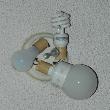 The only problem, of course, is that I filled all of my light sockets with expensive (and toxic) flourescent bulbs. Having a low wattage bulb in a socket doesn't really save anything when they are not turned on.
Lets see. If a kilowatt hour costs a dime, and the standard light fixture in my house consumes 50 kilowatts. I would have to replace about 400 hours of light consumption to save $20. It is on the outside of doable. Of course, I can now retask the flourescent bulbs (ie, give them to a charity).
Add that to the fact that I now have a flashlight (with no batteries) I figure it is a pretty big environmental plus.
Anyway, if you are going to participate in the Lights Out program, I believe that the real energy savings comes not simply figuring out how to turn lights out. But figuring out how to turn fewer lights on.
Real conservation happens when we figure out how to consume less in our day to day lives. Turning off lights is good. Figuring out how to live without turning lights on is even better.
A few months ago, I got a wind up flashlight. These flashlights have a small generator that charges a capacitor which fuels an efficient LED. The lights are basically run by human energy. So, other than the environmental damage done during manufacture, the flashlight is sustainable.
I got the flashlight for camping; However, I found that by keeping the flashlight with me at night, I can pretty much go without turning any lights on at home at night. The flashlight I have seeems durable enough to last several years.
It is strange, but having a the flashlight on the night stand encourages me to not turn on any lights at night.
The only problem, of course, is that I filled all of my light sockets with expensive (and toxic) flourescent bulbs. Having a low wattage bulb in a socket doesn't really save anything when they are not turned on.Lets see. If a kilowatt hour costs a dime, and the standard light fixture in my house consumes 50 kilowatts. I would have to replace about 400 hours of light consumption to save $20. It is on the outside of doable. Of course, I can now retask the flourescent bulbs (ie, give them to a charity).
Add that to the fact that I now have a flashlight (with no batteries) I figure it is a pretty big environmental plus.
Anyway, if you are going to participate in the Lights Out program, I believe that the real energy savings comes not simply figuring out how to turn lights out. But figuring out how to turn fewer lights on.
Tuesday, May 01, 2007
Strategic Bio Fuels Reserve
Fidel Castro and Hugo Chavez have been on a major international campaign against the use of ethanol and other forms of bio fuels.
I agree that massive Federal subsidies for ethanol production will likely run astray. Federal subsidies have a history of creating false economies. Subsidies tend to concentrate wealth in the hands of a few politically connected people. Subsidies also tend to mask market signals. In other words, like most big government programs, subsidies lead to a false economy where a very small number of extremely rich people make questionable decisions based on bad information.
In such a world, it is highly likely that the government program would divert food resources from the mouths of babes into the belly of the machine.
Although it is likely that the proposed ethanol subsidies will be little more than an expensive boondoggle, I believe it is possible for the government to support ethanol production without messing up the market. It is even possible that for a government to support ethanol without hurting the food supply.
The challenge with the food supply is that the food supply is controlled by the weather. In years of famine, there is insufficient supply of food. Prices rise, and the amount of food stored decreases. Interestingly, the years of abundance are often worse for farmers than years of famine. In years of abundance, the market is flooded with food, and prices drop as farmers try to unload perishables in a crowded market.
To help even out this unpredictable market ruled by feast or famine, the United States government has all sorts of subsidies, price controls and tariffs in place.
Rather than creating a new ethanol subsidy, the US government could spur development of ethanol by replacing several of the existing farm subsidies with a strategic bio-fuel purchasing program. This program would purchase excessive corn in years of abundance and convert the excess into bio-fuels. This program would only purchase grain in times of abundance. The program would then sell fuel from the reserves on a gradual basis (helping offset the cost of the reserves.)
By coordinating the purchase of bio mass for bio fuels with climatic cycles, the government would actually end up enhancing the food supply by stabilizing the food market. They would encourage the development of the ethanol market by creating a stable source of ethanol.
By developing a strategic reserve that concentrates solely on buying excess production during years of abundance, the government would effectively create a bio fuels subsidy that enhances both the fuel and food production cycles. Such a system would work within the existing market, and would allow the government to answer strategic security needs of providing fuel and food with a minimum of direct interference in the market.
I agree that massive Federal subsidies for ethanol production will likely run astray. Federal subsidies have a history of creating false economies. Subsidies tend to concentrate wealth in the hands of a few politically connected people. Subsidies also tend to mask market signals. In other words, like most big government programs, subsidies lead to a false economy where a very small number of extremely rich people make questionable decisions based on bad information.
In such a world, it is highly likely that the government program would divert food resources from the mouths of babes into the belly of the machine.
Although it is likely that the proposed ethanol subsidies will be little more than an expensive boondoggle, I believe it is possible for the government to support ethanol production without messing up the market. It is even possible that for a government to support ethanol without hurting the food supply.
The challenge with the food supply is that the food supply is controlled by the weather. In years of famine, there is insufficient supply of food. Prices rise, and the amount of food stored decreases. Interestingly, the years of abundance are often worse for farmers than years of famine. In years of abundance, the market is flooded with food, and prices drop as farmers try to unload perishables in a crowded market.
To help even out this unpredictable market ruled by feast or famine, the United States government has all sorts of subsidies, price controls and tariffs in place.
Rather than creating a new ethanol subsidy, the US government could spur development of ethanol by replacing several of the existing farm subsidies with a strategic bio-fuel purchasing program. This program would purchase excessive corn in years of abundance and convert the excess into bio-fuels. This program would only purchase grain in times of abundance. The program would then sell fuel from the reserves on a gradual basis (helping offset the cost of the reserves.)
By coordinating the purchase of bio mass for bio fuels with climatic cycles, the government would actually end up enhancing the food supply by stabilizing the food market. They would encourage the development of the ethanol market by creating a stable source of ethanol.
By developing a strategic reserve that concentrates solely on buying excess production during years of abundance, the government would effectively create a bio fuels subsidy that enhances both the fuel and food production cycles. Such a system would work within the existing market, and would allow the government to answer strategic security needs of providing fuel and food with a minimum of direct interference in the market.
Saturday, April 14, 2007
Solar Row
Solar engery is extremely interesting as it is a technology that we will want to incorporate into our living spaces and personal portfolio of investments. Increased awareness of solar energy is also intriguing from a design perspective. The goal of sustainable development is for people to develop living spaces that take maximum advantage of the sun that hits their property.
As people put their minds on developing houses with a low carbon footprint, they will find themselves doing all sorts of interesting calculations to keep sun for the garden, heating the house and generating electricity.
I just found a cool site: Solar Row is project by Wonderland Hill Development of Boulder, Colorado. This project has 13 houses designed for sustainable living. This is the type of project that I think will really make a difference in the world. A Baker's Dozen is about the maximum size that a rational human would want for a development. It is enough to give the developers the economy of scale that they need without creating a no-mans-land of undiffentiated houses that you get with bigger developments.
As people incorporate the ideals of sustainable living into design, I think we will see a massive improvement in the quality of our living spaces.
Unfortunately, the project is in Boulder (one of the most expensive communities in the Mountain West); So, I think I will buy a lottery ticket. If I win the lottery, I will buy a unit on solar row.
As people put their minds on developing houses with a low carbon footprint, they will find themselves doing all sorts of interesting calculations to keep sun for the garden, heating the house and generating electricity.
I just found a cool site: Solar Row is project by Wonderland Hill Development of Boulder, Colorado. This project has 13 houses designed for sustainable living. This is the type of project that I think will really make a difference in the world. A Baker's Dozen is about the maximum size that a rational human would want for a development. It is enough to give the developers the economy of scale that they need without creating a no-mans-land of undiffentiated houses that you get with bigger developments.
As people incorporate the ideals of sustainable living into design, I think we will see a massive improvement in the quality of our living spaces.
Unfortunately, the project is in Boulder (one of the most expensive communities in the Mountain West); So, I think I will buy a lottery ticket. If I win the lottery, I will buy a unit on solar row.
Subscribe to:
Posts (Atom)