It appears that my blog has been removed from the Google Search Engine.
It has a technorati rating of 4, which is about as low as a blog can get.
One of the problems is that google started blocking webcrawlers from the /search directory. They do this with a Disallow statement in the robots.txt file. The label links all go to this directory. To make matters worse, the date links use javascript. This structure essentially means that only the seven entries on the front page get crawled by google each month. None of the internal pages will be crawled.
So, I will probably be moving this blog to a new location.
The big challenge is that blogger doesn't have a mechanism for backing up posts and comments.
Anyway, if none of the pages get crawled, then I guess there is no point in dropping mind farts on this blog.
BTW, the voucher proposal went down big time. Writing about the proposal brought back the depressing memories of when I was cornered by the politically correct gatekeepers at the U's Education department. It is sad that so many people today fear choice and diversity.
Wednesday, November 07, 2007

Tuesday, November 06, 2007
Swim in the Bitterroot
I was called away to Hamilton, Montana and will miss the elections. It is ashame as I would love to vote for a more open and productive education system.
 Coco took a swim in the Bitterroot. The water was all shivery cold, but she had so much fun. She would have played 'til hypothermia set in. Speaking of hypothermia, I think that, on average, people in Montana spend more money on coats than people from Utah. My warm winter coat appears a bit pathetic.
Quite frankly, I hate releasing green house gasses just so I can stay warm. In Salt Lake, it is possible to heat a living space just by baking some bread. For that matter, I've gone years without turning on the heater in my apartment. Of course, I tend to work 12 hour days and just use the apartment for sleeping. So 52 degrees was adequate.
 Anyway, Coco went swimming at the Kiwanis River Park. The park has this nifty feature where they carved little animal figures into the tree stumps. They had a similar statue in the Denver City Park.
 Someone upgraded Salmon, Idaho by placing a bear statue in their new river park. Creating public right of ways along rivers and green corridors fits perfectly in the scope of what local community governments need to do. Salmon had the problem that an old gas station and abandonned cheese factory had polluted the soil in the prime real estate near the Salmon River. Transforming the area into a city park was a wise decision. This is especially true in a town that derives a great deal of income from the rafting and recreational fishing industry.
Coco took a swim in the Bitterroot. The water was all shivery cold, but she had so much fun. She would have played 'til hypothermia set in. Speaking of hypothermia, I think that, on average, people in Montana spend more money on coats than people from Utah. My warm winter coat appears a bit pathetic.Quite frankly, I hate releasing green house gasses just so I can stay warm. In Salt Lake, it is possible to heat a living space just by baking some bread. For that matter, I've gone years without turning on the heater in my apartment. Of course, I tend to work 12 hour days and just use the apartment for sleeping. So 52 degrees was adequate.
Anyway, Coco went swimming at the Kiwanis River Park. The park has this nifty feature where they carved little animal figures into the tree stumps. They had a similar statue in the Denver City Park.Someone upgraded Salmon, Idaho by placing a bear statue in their new river park. Creating public right of ways along rivers and green corridors fits perfectly in the scope of what local community governments need to do. Salmon had the problem that an old gas station and abandonned cheese factory had polluted the soil in the prime real estate near the Salmon River. Transforming the area into a city park was a wise decision. This is especially true in a town that derives a great deal of income from the rafting and recreational fishing industry.
Thursday, November 01, 2007
Tie In
Oops, I forgot the tie in between the last two posts. In the fractional post I note that vouchers would increase per student spending and would increase total spending (private and public) on K-12 education.
Because the program is breaking an the educational monopoly (96% of the market) it would reduce total money controlled by the monopoly. So there would be less spending on public education. The reason for the Power v. Wealth post is that I figure that this last figure is really only of interest to people who consider the power of the public education to be more important to the wealth that students gain through increased spending on their education. The power weilded by the public teachers would decrease. If you consider this to be the primary factor in education they you should vote against the proposal. If you consider the wealth gained through diversity in education is more important; you should vote for the proposal.
Because the program is breaking an the educational monopoly (96% of the market) it would reduce total money controlled by the monopoly. So there would be less spending on public education. The reason for the Power v. Wealth post is that I figure that this last figure is really only of interest to people who consider the power of the public education to be more important to the wealth that students gain through increased spending on their education. The power weilded by the public teachers would decrease. If you consider this to be the primary factor in education they you should vote against the proposal. If you consider the wealth gained through diversity in education is more important; you should vote for the proposal.
Fractional Debate
Prior to becoming a Congressman, Representative Rob Bishop spent 28 years as a public school teacher; so, it is not surprising that he doesn't know how fractions work. Very few people in public education these days seem to understand complex ideas like fractions or grammar. Anyway, Representative Bishop is running a TV ad that says:
He is wrong. Vouchers will decrease spending on public schools. It will, however, increase total spending on education.
The Teachers Union is running ads that say vouchers will pull money from the public schools and conclude that this will decrease spending per student in public schools and increase class sizes. This, again, is not true. Vouchers would reduce the number of students at a greater rate than the reduced funding; so it actually increases spending per student.
Of course, I would not expect a group of public school teachers to be able to do fractions. I forgive them this error.
While fractions are above the required skill set for public school teachers, I think fractions are a good thing for voters to understand. This whole voucher debate is about the complex inner working of fractions.
Utah is a land of extremes. I've seen in several blogs and news articles the figure that 96% of Utah students go to public school. (I have not found an authoritative source for this number). Utah has an extremely high birth rate. The result of these facts is that Utah has both the highest tax burden for taxpayer in the US and ranks among the lowest in per capita spending per student. States with higher percentages of students in private school have more money to spend per public school student and have a lower tax burden.
The whole voucher thing will help correct this imbalance.
The extremely high tax burden makes it hard to improve per student spending. Since there is a projected spike in new students in coming years, Utah will soon be facing an education crisis.
The number of students is outside the control of the legislature. Utah could reduce the crisis if it found a way to divert some of the increase in our school population to private schools, where they are less of a burden on the state.
The voucher program would create a mechanism that would allow students underserved by the public school system a way out. It does this by creating a resource that follows the student. The resource ranges from $3000 to $500 depending on a family's income.
If a student leaves the public school, they will take $3k and add some of their personal money and go to a private school. They will leave $4k in the public school.
So, here is what the numbers do:
There are some students who are going to private schools who will use vouchers. This group pays taxes for services that they do not use. The voucher system will decrease the total amount of wealth transferred from this group. Reducing this wealth transfer directly decreases spending on public schools. There is a fairness issue here. The system is charging people for a service that they do not use.
A larger group will be students who leave the public school and go to private schools. The students in this group will take $3000 with them to their new school, but leave $4000 in the public school system. The families of these students are likely to spend an additional $2000 of their own money on education. The people in this group will free up resources for other students in public education. They will dramatically increase the amount spent in private education. This group will result in a big boost in total education expenses in the state.
Utah currently has only a tiny number of students in private schools. So, the proposal is likely to result in a big increase in the total spent on education. This increase would be realized primarily by the private schools.
Since Utah is expecting a big influx of students in upcoming years, we are likely to see a boom in the private school industry, while the public school system simply stays phenomenally large.
The public school system is like Walmart. The new fad of town sponsored Farmers Markets has decreased the growth of Walmart, but Walmart is still really big. Just as the Farmers Market has spurred a growth in small independently owned farms, the voucher system will spur the growth of small independently owned schools. The initiative simply increases local ownership, quality and diversity. Just as Walmart is huge, the public school system will remain huge.
This is the summary of the voucher proposal:
The Total amount spent on education increases and per student spending increases.
This increase will be realized primarily by the private school system.
The boom in privately owned schools would lead to a boom in privately owned local equity. The increase in privately owned equity would increase overall wealth in the state and increase state tax revenues.
The high taxpayer burden for education in Utah would remain the same, but there would be an increase in spending per student. The only social justice question is that wealthy families currently sending their children to private schools could get a break of $500 per child. This is countered by moral questions about robbing peter to pay paul.
It is sad, but most of the ads on the voucher proposal seem to be misleading people. The voucher system will increase spending per student. It will dramatically increase the amount spent on private education in this state. It will decrease the total number of students in public schools and decrease the growth of the public education behemoth (which will remain humongous).
Richard Eyre of Values Parenting has one of the better commercial on vouchers. In his commercial he has a plate with thirty stacks of cookies seven cookies high to represent a public school classroom. He shows that if you take one of the stacks of cookies from the plate, then redistribute 4 of the cookies from the stack back on the plate, the remaining stacks of cookies would be higher.
I wish his commercial showed additional cookies being added to the stacks going to the private schools. The amount of money parents spend on their kids should count as money spent on kids. Alas, I fear Mr. Eyre's model is far too complicated for people educated in the public school system to comprehend.
[the voucher system] increases funds for spending on public schools
He is wrong. Vouchers will decrease spending on public schools. It will, however, increase total spending on education.
The Teachers Union is running ads that say vouchers will pull money from the public schools and conclude that this will decrease spending per student in public schools and increase class sizes. This, again, is not true. Vouchers would reduce the number of students at a greater rate than the reduced funding; so it actually increases spending per student.
Of course, I would not expect a group of public school teachers to be able to do fractions. I forgive them this error.
While fractions are above the required skill set for public school teachers, I think fractions are a good thing for voters to understand. This whole voucher debate is about the complex inner working of fractions.
The Math of Vouchers
Utah is a land of extremes. I've seen in several blogs and news articles the figure that 96% of Utah students go to public school. (I have not found an authoritative source for this number). Utah has an extremely high birth rate. The result of these facts is that Utah has both the highest tax burden for taxpayer in the US and ranks among the lowest in per capita spending per student. States with higher percentages of students in private school have more money to spend per public school student and have a lower tax burden.
The whole voucher thing will help correct this imbalance.
The extremely high tax burden makes it hard to improve per student spending. Since there is a projected spike in new students in coming years, Utah will soon be facing an education crisis.
The number of students is outside the control of the legislature. Utah could reduce the crisis if it found a way to divert some of the increase in our school population to private schools, where they are less of a burden on the state.
The voucher program would create a mechanism that would allow students underserved by the public school system a way out. It does this by creating a resource that follows the student. The resource ranges from $3000 to $500 depending on a family's income.
If a student leaves the public school, they will take $3k and add some of their personal money and go to a private school. They will leave $4k in the public school.
So, here is what the numbers do:
There are some students who are going to private schools who will use vouchers. This group pays taxes for services that they do not use. The voucher system will decrease the total amount of wealth transferred from this group. Reducing this wealth transfer directly decreases spending on public schools. There is a fairness issue here. The system is charging people for a service that they do not use.
A larger group will be students who leave the public school and go to private schools. The students in this group will take $3000 with them to their new school, but leave $4000 in the public school system. The families of these students are likely to spend an additional $2000 of their own money on education. The people in this group will free up resources for other students in public education. They will dramatically increase the amount spent in private education. This group will result in a big boost in total education expenses in the state.
Utah currently has only a tiny number of students in private schools. So, the proposal is likely to result in a big increase in the total spent on education. This increase would be realized primarily by the private schools.
Since Utah is expecting a big influx of students in upcoming years, we are likely to see a boom in the private school industry, while the public school system simply stays phenomenally large.
The public school system is like Walmart. The new fad of town sponsored Farmers Markets has decreased the growth of Walmart, but Walmart is still really big. Just as the Farmers Market has spurred a growth in small independently owned farms, the voucher system will spur the growth of small independently owned schools. The initiative simply increases local ownership, quality and diversity. Just as Walmart is huge, the public school system will remain huge.
Summary
This is the summary of the voucher proposal:
The Total amount spent on education increases and per student spending increases.
This increase will be realized primarily by the private school system.
The boom in privately owned schools would lead to a boom in privately owned local equity. The increase in privately owned equity would increase overall wealth in the state and increase state tax revenues.
The high taxpayer burden for education in Utah would remain the same, but there would be an increase in spending per student. The only social justice question is that wealthy families currently sending their children to private schools could get a break of $500 per child. This is countered by moral questions about robbing peter to pay paul.
Back to the Campaigns
It is sad, but most of the ads on the voucher proposal seem to be misleading people. The voucher system will increase spending per student. It will dramatically increase the amount spent on private education in this state. It will decrease the total number of students in public schools and decrease the growth of the public education behemoth (which will remain humongous).
Richard Eyre of Values Parenting has one of the better commercial on vouchers. In his commercial he has a plate with thirty stacks of cookies seven cookies high to represent a public school classroom. He shows that if you take one of the stacks of cookies from the plate, then redistribute 4 of the cookies from the stack back on the plate, the remaining stacks of cookies would be higher.
I wish his commercial showed additional cookies being added to the stacks going to the private schools. The amount of money parents spend on their kids should count as money spent on kids. Alas, I fear Mr. Eyre's model is far too complicated for people educated in the public school system to comprehend.
Power v. Wealth
This post exists so that I can reference it in the next post.
Robert Kiyosaki pushes a get rich quick scheme book called "Rich Dad Poor Dad." Mr. Kiyosaki's father (the poor dad) was a bureaucrat in the Hawaiian education system. The poor dad excelled at the political techniques needed to move ahead in a big bureaucracy. He didn't know how money works, and was often in financial turmoil.
The poor dad actually belonged to his best friend. This dad taught the young Kiyosaki about the way money works. Following the financial advice of the rich dad, Mr. Kiyosaki was able to do more in his life than if he followed the path of his bureaucratic dad.
Now, I did not like the Rich Dad Poor Book (so no link). The one gem I took away from it was that the bureaucratic mindset judges success by the amount of power the bureaucrat has over others. The free market mindset judges one's success by what one does with their resources. Success to the bureaucrat is the number of people below them in the political hierarchy. The free marketeer judges success by the thing that they have created in life.
I've seen several posts claiming that 96% of Utah's students are in public education.
A monopoly that has absolute control over a segment market is the ultimate desire of the bureaucratic mindset. It doesn't really matter how well the monopoly performs. The state of monopolistic control is the ultimate goal.
The ideal of this paradigm is the organization man who denies their personal ego then throws their entire being into the power structure of the group.
My sympathies are with the small companies that are struggling to come into existences. I look at vouchers choice and really want to see what these independent thinkers would create. I understand the desire to create but not the desire to control.
I fear that the teacher's unions, that are throwing millions to stop freedom of choice in education, are spurred by a primal desire for power. The power is in the monopoly.
When I look at the voucher debate, I see a pro-voucher group driven by the desire to create, and the teachers unions driven by the desire to control. Or better state, I see a group set on nothing less that absolute dominance.
The funny thing is that the voucher proposal will go down in defeat simply because the press will question the motives of the private schools. The public will experience a sense of fear and vote no. We fear that the private schools might create wealth, or do a better job of education for less, not realizing that we've given total power to a more insidious group that has its own motive.
It is true that the political mind that spends its days grubbing for power rarely ends up with as much wealth as the evil capitalist. I really can't say that their motives are purer.
I do feel comfortable saying that the person dedicated to the production of wealth produces more wealth than the person dedicated to the pursuit of power. For that matter, those dedicated to the pursuit of power often impoverish those around them.
I think we are driven by the idea that schools pursuing the creation of wealth will somehow corrupt our kids; so we opt for those who pursue power.
I actually see a well educated mind as the greatest wealth that a person can eve4r hope to attain, and that the best way to cultivate well educated minds is through freedom.
Tuesday, October 30, 2007
Utah Educational Savings Plan
I don't know what to do on this one.
The The Utah Educational Savings Plan encourages people to save for college. I agree with this message wholeheartedly. The program is administered by a political group (The Utah Board of Regents) as such it gives special 529 tax savings. Basically, you don't have to pay capital gains tax on profits from the investment if you use the investment for education.
It looks like the money will actually be invested with the multi billion dollar Vanguard Group investment funds. The UESP web site brags that they have already transferred over $2 billion in savings from smaller independent banks or independently owned stock to the massive Vanguard Investment group.
I love the message that people should save for college. The site tears my heart apart, however, because it is using special tax breaks to transfer savings from the financial instruments of the family's choice to one of these mixed government/private sector investment schemes.
It is like so many of the bastardized plans that come out of the government. I love the intention but see the implementation as something that does great harm.
Monday, October 29, 2007
Finding the Best School
I think there is some misunderstanding of which school is best for which student. Way back in the day, I met a person researching the issue and he explained that things were the reverse of what people typically think. The top students do best in public schools, Middlesome students do best in private schools. Special needs students tend to do better in public schools as well.
The reason for this has to do with the source of the income. Public schools are publically funded, which means that the teachers get to choose where to allocate their time and attention. Teachers tend to take to the extremes. Those teachers who love their subject will choose favorites from the bright motivated students in the class interested in the subject.
Those teachers motivated by charitable desires divert attention toward the special needs students. In many schools, average Joe student sits there and languishes. Students who are a bit rowdy are diagnosed with ADHD, given some pills to pop so that they will languish without disturbing the teacher.
The funding for private school comes from the parent's pocket. With parents as the customer, it is much more difficult to divert resources from student A to student B. The customer is much more attentive to any favoratism.
If your kid is super motivated and skilled at taking advantage of the resources offered, then they should go to public schools. The public schools have the deep pocket of the taxpayet to provide better quality resources. As I understand, more doctors and lawyers come from public schools.
If your kid has a hard time being motivated, they are better served by the private school that is trying to deliver a given product.
Special needs kids generally do better in public schools. Again, it is the matter that the public school is able to divert resources from the middle to administer the needs of the ends. Private schools are not in a position to divert resources from other kids to handle the special needs kids.
They do okay when the extra cost of handling special needs kids is figured in the price.
In a public school, the money comes from the government and it up to the students and teachers in a political process to decide how it gets spent. It is not uncommon to see $8k being allocated per student with some kids getting a $20k education and those in the middle getting short changed with a $3k education.
The private school, might get $5k per student, but it is not able to divert those resources either up or down. The middle students get short changed some, but not to the extent that would happen in a public school.
The student that is best served by the public school is your typical unmotivated teen from a middle or lower income family. Well educated parents who know how to use the system are better off sending their kids to the public school, then switching to private only if they have problems with the school.
The contrast of this article was written in broad strokes. Private schools tend to follow a business plan where they write a business model and design the education as product. A private school designed for special needs kids will rock. One just trying to give an education will have a hard time with the special needs kids. A private school dedicated to teaching the next generation of doctors will produce doctors. However, your run of the mill private school simply won't have the resources of a big public school.
In my ideal education system, I would want students to be able to get the resources that best suit their needs. That means a diverse education system with schools of different payment structures and interests. If a student isn't finding what they need at their current school, they should be able to move on.
The public schools, like other leftwing controlled institutions, have the nasty habit of playing the ends against the middle.
My ideal system is one where the schools design the product, and the students seek out the product that will help them develop and achieve positive goals.
Added 10/30/2007: Chicago University Report says Catholic Schools work in inner cities.
New Photos
 I took another round of photos of the 4500 South Bridge Construction. It was really cool. About a thousand people showed up to watch a bridge put into place. They used massive hydraulic moving equipment to move the old bridge out of the way and the new bridge in place.
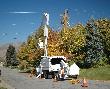 Crowds lined Wasatch Boulevard, I215, the Churchill Junior High field and Olympus Hills Park.
 I get a large number of hits on the Liberty Park gallery; so I took a few new pictures of that park. Last week, I took some pictures of the Trax Construction at the Gateway Plaza.
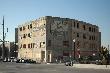
 I also decided to do a walk around the new Granite School District Offices. As you can see, the Utah Public school system is really hurting for money. The district bosses have to work in substandard conditions. There are some who make under $100,000 a year!
Saturday, October 27, 2007
Mormon Schools
Natalie R. Collins reports that, at her daughter's junior high, the active Mormons play a game where they dress special on a given day. The result of the game is that is easy to vet out which kids are Mormon and which are not.
I lead in with this simply to note that, in Utah, things are different.
As my college professors would put it: the Mormons have hegemony in this state.
Traveling around the state, you will find an LDS Seminary adjacent to just about every public school. Utah law allows generous off campus privileges so that students can attend classes in the seminary. When I was in school, Utah graduation requirements were a bit easier than most states to free up time so the kids could go to seminary.
The Utah school paradox is that, although Utah has a strongly religious population, Utah also has the highest percentage of students that go to public schools.
The reason for this is obvious. In Utah, the public school system is essentially the Mormon parochial school system. Looking through the list of private schools, you just don't find a category of Mormon schools.
It is my observation that the LDS world view is very much driven by community. When you move into an area, you are expected to go to the ward for the area, and that your children will go to the public school in the area. I get the feeling that most Mormons really aren't keen on uppity people who go to private schools.
As the LDS have hegemony in the public schools, a sizeable portion of the private school population is non-Mormon families trying to get their children into a more secular environment.
At this point in time, the primary beneficiary of the voucher law will be non-Mormon kids from lower income levels who feel alienated being in a Mormon dominated public school, but can't afford a way out.
A few critics of the voucher proposal seem to be positioning the voucher issue as an effort of rightwing Mormons to pull their students from the public school system. I really don't see this. The Mormons I know are all very content with their kids going to the neighborhood church and the neighborhood public school. The seminary is positioned to counter any anti-Mormon bias of the secular school.
Here, I should note that I am a cynical b-tard who thinks the LDS Church writes all Utah legislation then sends it to the legislature for a rubber stamp. However, as the vouchers are not advantageous to LDS Church (they will still continue to use and dominate the public schools) I don't buy this argument.
I've toyed with the idea that the LDS Church wants to get into the private school business, and that the voucher issue is a way to get the Utah taxpayer's to fund the creation of a new Mormon owned school system. If this were the case, then I think we would be seeing Mormon schools popping up throughout the state. I don't see this happening.
In my lifetime, the LDS Church has divested itself of many of its businesses including its chain of department stores, its hospitals and some of its financial institutions.
The best I can come to a nefarious motivation on the voucher law is that the Utah Republican majority wants Utah to be a leader on national conservative issues. Passing the vouchers increases the states credentials as a center of conservative thought. The motivation is that the Mormons want to ease up on their local hegemony so that they can play a braoder role in the world of ideas. This motivation would make Dr. Evil yawn.
When I was in the U of U's education department, I was taught to see everything as great hegemonic battles. The idea is that, for society to progress, all socio-economic actions must be placed in the context of a class struggle. We can find such struggle in Mormon history. In early Mormon history, it appears the LDS Church was set on finding an area that they could dominate, politically, socially and culturally.
In the last half century, though, the LDS Church seems much more interested in its role as an international organization, and less on the desire to dominate the local scene.
If anything, I think the LDS Church wants to promote Utah as a meeting place of religions. This last half century has seen the construction of Mosques, Hindu Temples and Synagogues and that there is an authentic desire to have a diversity of schools and diversity of religious thought in the valley. Some of these efforts have received direct support from the LDS Church.
As for the motivation of the political leadership in the state, I think they are driven primarily by economic concerns. The fact that Utah has the highest percentage of its work force coming from the same cookie cutter public schools means that we lack the diversity of thought of other economic hubs. The lack of private schools makes it hard to attract businesses to the state.
Regardless, I can find no reason to characterize the voucher proposal as some sort of "Mormon-thing" as the LDS Church is not a primary benefactor of the proposal. Non-Mormons are more likely to use the vouchers than Mormons. The idea really seems to be propelled by the belief that diversity in schools will lead to better education for all.
Monday, October 22, 2007
Competition in Schools
If you are opposed to vouchers; one of the best ways to sway the popular vote to your side is simply to inject the word "competition" into the conversation as many times as possible. This is the technique used in the Voucher Debate on Comcast on Demand.
I couldn't find a link to the program. I watched it at a house that had Comcast On Demand, but didn't have a note pad handy. I suspect it was the 9/27/2007 Hinckley Forum Debate between Carol Spackman and Richard Eyre. I could be wrong.
Praising competition as the foundation of the free market makes one seem open minded and balanced, while making the free market seemed closed minded, harsh and distant. As I argued in my last post this is nothing more than a chimera.
Education is primarily a nurturing activity. It is not a competitive activity. Most people have bad memories of grade competition. They want a system of education where their children learn, and not one where they claw at each other in some sort of graded arena for the teacher's attention.
If ten kids entered a math class based entirely on competition. You are likely to end up with two pretentious twits who are okay at math but whose egos are tied around the subject in a distorted way. The other eight would spend their lives thinking that they were "stupid at math."
Parents do not want this for their kids. They want their children in nurturing environments where the students learn.
Carol Spackman clearly won the debate because she spouted the word competition until the single word rang above all other arguments. She even pulled a theatrical stunt where she babbled about competition until her eyes rolled back. I am sure that this technique polled well.
If you are for vouchers, you have to emphasize that freedom, not competition, is the foundation of the free market. The reason that private education is able to do more with less is that, when a family has the freedom to choose their school, they are in a position to create a deeper more cooperative relation with the school. When there is freedom of choice, people are able to create more substantive forms of cooperation than one where the child's education is left to the dictates of a bureaucracy.
Competition and cooperation are complementary elements of life. What parents and students want are schools that cooperate with the family in achieving a quality education for the child. The voucher system does this by creating an structure where schools compete for students. These schools compete by showing who can be the most cooperative with the parent and child.
Carol Spackman spoke proudly of all the competitions that students have to endure in public schools. The competitions, however, are between the students. The NEA would not abide by competitions between the teachers.
The public schools structure is one that nurtures the teachers, but throws the students in a competitive environment where they most compete for the school's resources or diminish.
The private school system is one where the schools compete for students. It means the competition takes place among the schools. This competition is one where mediocre schools fail. That is, schools which aren't able to create an environment where their students excel fall to the wayside. As the free market is able to absorbed failed teachers in other occupations, this is more acceptable to the public school system which forces the failure onto the students.
My favorite subject is teaching companies.
The voucher and charter systems create competition among schools. The teaching company structure would go one level deeper and create direct competition between classrooms. There would be a competition among companies about who could teach subject XXX best.
I bring up teaching companies as they show an interesting dynamic about how things could work in a fully open education structure. A teaching company cooperates with the school to provide quality courses to the students. They cooperate with the students in the learning process. There would be a competition between the teaching companies on how well they cooperate with the students and school. A teaching company that is not able to adapt its course to a given school is likely to lose that contract. A teaching company that is not able cooperate with the students in the learning process is apt to raise the ire of students, and put the teaching contract in question.
Lets say you have a successful teaching company in a school that is failing, the structure would allow the successful of the school to quickly migrate to a new market when the school goes under.
Cooperation and competition are complementary ideas. An open education market would creates a structure where the competition exists among the providers, and it creates a structure that is most nurturing for the students. The closed system of the public schools creates a structure that is nurturing for the teachers, but leaves the students in a base competition for the school's resources. A few students excel in this environment. Most languish. We can judge the high fail rate of the public schools by the large number of people who come out of the schools with a less than adequate education and languish in dysfunctional lives.
I couldn't find a link to the program. I watched it at a house that had Comcast On Demand, but didn't have a note pad handy. I suspect it was the 9/27/2007 Hinckley Forum Debate between Carol Spackman and Richard Eyre. I could be wrong.
Praising competition as the foundation of the free market makes one seem open minded and balanced, while making the free market seemed closed minded, harsh and distant. As I argued in my last post this is nothing more than a chimera.
Education is primarily a nurturing activity. It is not a competitive activity. Most people have bad memories of grade competition. They want a system of education where their children learn, and not one where they claw at each other in some sort of graded arena for the teacher's attention.
If ten kids entered a math class based entirely on competition. You are likely to end up with two pretentious twits who are okay at math but whose egos are tied around the subject in a distorted way. The other eight would spend their lives thinking that they were "stupid at math."
Parents do not want this for their kids. They want their children in nurturing environments where the students learn.
Carol Spackman clearly won the debate because she spouted the word competition until the single word rang above all other arguments. She even pulled a theatrical stunt where she babbled about competition until her eyes rolled back. I am sure that this technique polled well.
If you are for vouchers, you have to emphasize that freedom, not competition, is the foundation of the free market. The reason that private education is able to do more with less is that, when a family has the freedom to choose their school, they are in a position to create a deeper more cooperative relation with the school. When there is freedom of choice, people are able to create more substantive forms of cooperation than one where the child's education is left to the dictates of a bureaucracy.
Competition and cooperation are complementary elements of life. What parents and students want are schools that cooperate with the family in achieving a quality education for the child. The voucher system does this by creating an structure where schools compete for students. These schools compete by showing who can be the most cooperative with the parent and child.
Carol Spackman spoke proudly of all the competitions that students have to endure in public schools. The competitions, however, are between the students. The NEA would not abide by competitions between the teachers.
The public schools structure is one that nurtures the teachers, but throws the students in a competitive environment where they most compete for the school's resources or diminish.
The private school system is one where the schools compete for students. It means the competition takes place among the schools. This competition is one where mediocre schools fail. That is, schools which aren't able to create an environment where their students excel fall to the wayside. As the free market is able to absorbed failed teachers in other occupations, this is more acceptable to the public school system which forces the failure onto the students.
Teaching Companies
My favorite subject is teaching companies.
The voucher and charter systems create competition among schools. The teaching company structure would go one level deeper and create direct competition between classrooms. There would be a competition among companies about who could teach subject XXX best.
I bring up teaching companies as they show an interesting dynamic about how things could work in a fully open education structure. A teaching company cooperates with the school to provide quality courses to the students. They cooperate with the students in the learning process. There would be a competition between the teaching companies on how well they cooperate with the students and school. A teaching company that is not able to adapt its course to a given school is likely to lose that contract. A teaching company that is not able cooperate with the students in the learning process is apt to raise the ire of students, and put the teaching contract in question.
Lets say you have a successful teaching company in a school that is failing, the structure would allow the successful of the school to quickly migrate to a new market when the school goes under.
Cooperation and competition are complementary ideas. An open education market would creates a structure where the competition exists among the providers, and it creates a structure that is most nurturing for the students. The closed system of the public schools creates a structure that is nurturing for the teachers, but leaves the students in a base competition for the school's resources. A few students excel in this environment. Most languish. We can judge the high fail rate of the public schools by the large number of people who come out of the schools with a less than adequate education and languish in dysfunctional lives.
Subscribe to:
Posts (Atom)